When Jake moved into Wesley’s Supportive Housing program almost three years ago, he quickly became a familiar and much-loved face in the building. Known for his humour, big personality, and love of storytelling, Jake brought energy and warmth to everyone around him.
Wesley’s Supportive Housing program provides ten comfortable suites for people living with both mental health challenges and developmental disabilities, including Schizophrenia, Schizoaffective and Bipolar Disorders, and/or Intellectual Disabilities or Autism. Each person gets a personalized care plan that focuses on their goals and quality of life. Along with daily support, the program offers structured activities, recreation, and help building connections in the community. By offering this level of care, the Supportive Housing program is helping to reduce hospital stays and filling an important gap in local services.
The admissions process for this program begins with a referral, where staff review each individual’s file to determine if they might be a good fit. Sometimes, individuals who are referred either need different support from what is offered, or they don’t need the level of support provided and would benefit more from a less-intensive program. From there, they visit them at St. Joseph’s Healthcare’s West 5th Campus where they are staying to begin building a connection, helping to make the transition to Wesley’s Supportive Housing smoother and more comfortable. Clients then take part in a series of visits to ensure they feel at ease with the environment, routines, and expectations.
“The goal is to find the right fit, someone who will both benefit from and actively engage with the program’s support. Jake was a great example of that balance: he needed the full range of assistance the program offers, and in turn, he thrived within it.”
Jake was the very first admission for one team member who was new to the team and still remembers that day vividly. “It was special,” they said. “I met him at the hospital, brought him here, and was able to see his whole journey unfold.”
Before moving in, Jake spent about a year at West 5th Hospital. This was not his first admission, but part of a longer journey toward stability and independence. Like many individuals living with lifelong mental health challenges, Jake spent time in various community residential settings, each offering different levels of support. While those programs provided excellent care, they weren’t always able to be tailored to his specific needs or pace. At times, gaps in care or medication management led to hospital readmissions. At Wesley, Jake found a setting that offered both structure and flexibility, a place where individualized support helped him build confidence, connection, and a sense of home.
From the start, Jake was ready to interact with everyone he met and began building relationships with other clients and staff. He was funny, sometimes stubborn, and always full of stories, especially about his big family spread across Southern Ontario and Six Nations. His sister, who runs a popular pizza shop, was often the subject of his proudest tales (and occasional pizza deliveries for his friends).
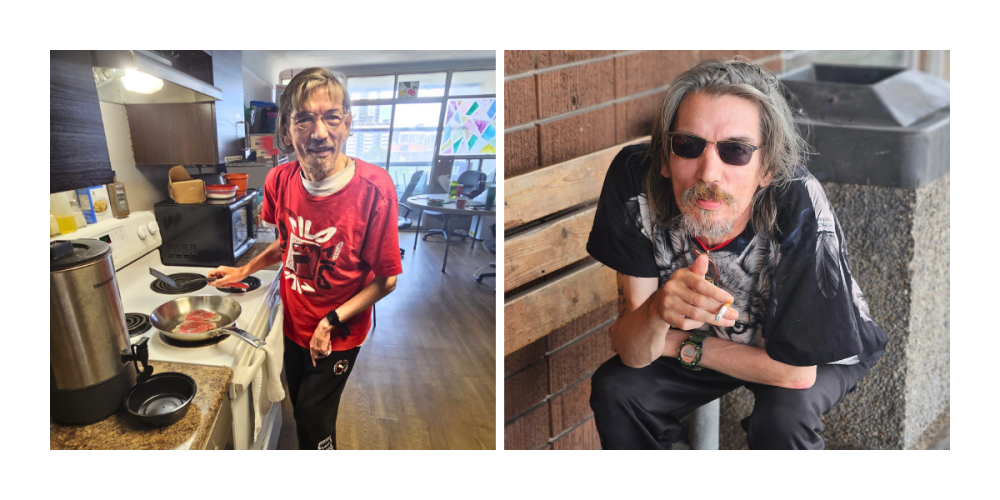
Over time, Jake made great progress in his personal goals. With support from staff, he built confidence in cooking for himself, managing the pain of his cerebral palsy, and maintaining his independence while living with schizophrenia. He loved his daily routines, his friendships, and the chance to just “be a regular guy”. This meant having a chance to cook his own meals (mostly steaks) with ingredients he shopped for himself, attend football games, and even negotiate having the occasional beer. The sense of pride, accomplishment, and independence he gained from what most might consider ‘business as usual’ is the reason the Supportive Housing program exists. Helping those who may have had difficulties in preserving their dignity in other types of programs they’ve tried.
One of Jake’s most meaningful achievements was getting a tattoo in memory of his mother, who passed away during his time in the program. Jake would visit her often, even staying with her for a few days over the holidays. Despite her own struggles and being unable to provide the level of care Jake needed, they remained close and cherished their mother-son bond. “It was something he really wanted,” a staff member shared. “We helped him plan it, save up the money for it, and make it happen. He showed that tattoo to everyone he came across, it meant the world to him.”
Jake’s sense of humour and warmth made him unforgettable. He was known to “fire” staff members as a running joke and tell tales that sometimes seemed unbelievable but were always entertaining. But beneath the jokes was a deep desire for connection, belonging, and respect.
Music was one of Jake’s greatest joys. Friends in the program remember how excited he was to order a new boombox online after he had generously gifted the one he had to someone else, feeling that they needed it more than he did at the time. It was a simple thing that brought him happiness and connection. “He didn’t even get to use it,” one resident said softly, “but he was so proud to have it.”
In his final months, Jake’s health declined rapidly following a sudden cancer diagnosis. Wesley staff and friends made sure he was surrounded by care, visiting him often, bringing his favourite music, and calling to check in.
“He had a big heart,” one resident said. “I just hope he’s up there having a good time with the rest of his family who have passed.”
In a final act of generosity, Jake donated his eyes through the Trillium Gift of Life Network. His choice to do so brings a sense of pride to his sister whenever she shares his story.
As we remember Jake, we’re reminded of what’s possible when individuals are given the chance and support they need to build their own success. With the right environment, compassionate care, and encouragement, people can grow, heal, and rediscover their purpose. Wesley’s Supportive Housing program makes that possible, helping each person live with dignity, connection, and hope – one story, one connection, and one milestone at a time.