
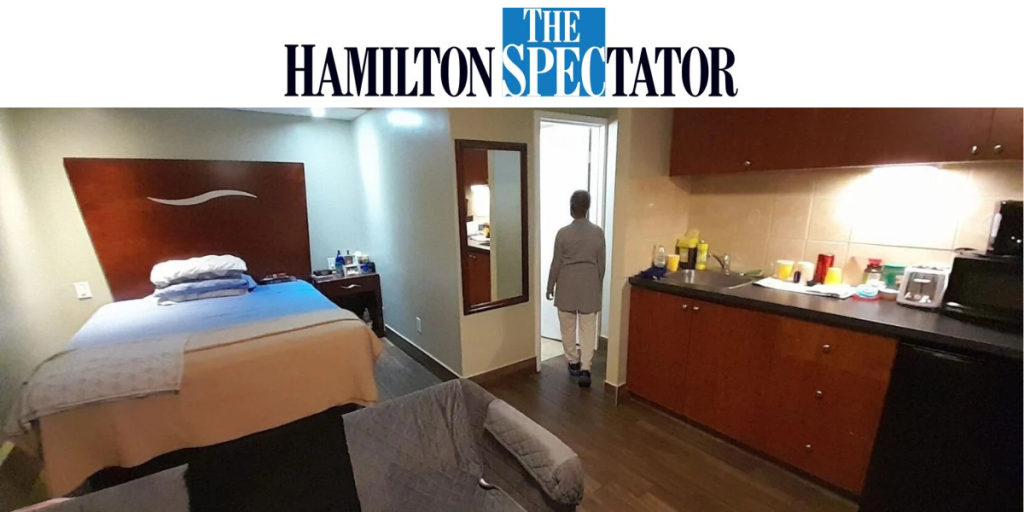
Wesley and Halton Region work to navigate people back into homes they can afford as the crisis deepens.

Dec. 23, 2025 4 min read By Teviah Moro Reporter
- Homelessness is increasing in Halton Region, impacting new groups like seniors and families.
- The subsidized housing waitlist grew 72 per cent between 2021 and 2024, with over 8,000 applicants.
- In 2024, shelters operated at 140 per cent capacity as unsheltered homelessness increased to 18 per cent.
She knew it was coming, but when it happened, the eviction still hit hard.
“A gut punch” is how Barbara describes losing her Burlington apartment this past summer when she couldn’t keep up with rent.
That was after selling her condo of 30 years amid mounting financial woes.
And so, after decades of working solid jobs, contributing to a decent pension and saving money, it was “surreal” to wind up homeless.
No less so at age 78.
“If a fortune teller had told me that, I’d say, ‘Take your business somewhere else. You’re talking to the wrong person.’”
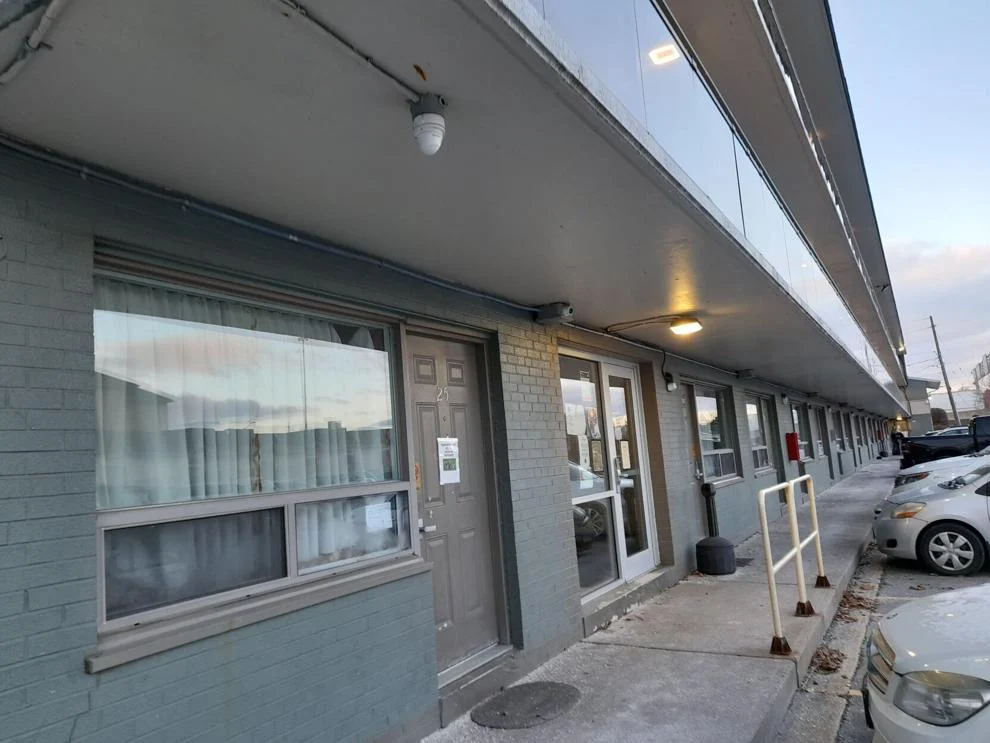
She’s staying at a shelter for women and families, a former motel in Burlington operated by social-service agency Wesley.
Teviah Moro/The Hamilton Spectator
Barbara didn’t want her last name used out of concern for how her tight-knit church community might react to her circumstances.
But she wanted to tell her story to help shine a light on the growing problem of homelessness in Halton Region.
Statistics paint a sobering portrait of rising housing precarity as rental rates and house prices continue to outstrip incomes.
More than 8,000 applicants are waiting for subsidized housing in Halton, which has roughly 5,000 units.
That waiting list increased by 72 per cent between 2021 and 2024, the region notes.
Meanwhile, the region’s two shelters were at 140 per cent capacity in 2024, with 521 people or households accessing them.
(In addition to Wesley’s program, the Salvation Army has a men’s shelter in Oakville.)
In 2024, a “point-in-time count” in Halton tallied 343 households struggling with homelessness during a one-day snapshot.
Among those, the percentage of those living through “unsheltered” homelessness rose to 18 per cent from two per cent in the 2021 count.
Teviah Moro/The Hamilton Spectator
Halton’s mounting struggles with homelessness track with other parts of Ontario, says Tiffany Dorman, Halton’s manager of homelessness and supportive housing.
“And it’s affecting groups not traditionally associated with homelessness, like seniors and families.”
Last year, for instance, of the 521 households that accessed local shelters, 17 per cent were families and 11 per cent were 65 and over.
Those figures are “certainly concerning,” Dorman noted, but they were down from 2023, when families and seniors represented 21 per cent and 13 per cent of the mix.
The region attributes that drop to focused efforts on homelessness prevention, she said.
Barbara says it was a “scam” that sparked her spiral.
The scheme duped her into forking over money for “gift cards” that ostensibly would translate into a home purchase in the United States.
“The more cards you buy, the money keeps increasing, but you have to pay all of these ‘taxes,’ and you pay and you pay.”
Ultimately, it forced her to sell her condo and then challenged her ability to pay rent, leading to the eviction this past summer.
Teviah Moro/The Hamilton Spectator
“The rent went up, and so when it went up, whatever money I had left was going there,” Barbara recalls. “I could no longer maintain paying that and I couldn’t survive anymore.”
After searching in vain for an affordable place, she connected with Halton Region, which placed her in Wesley’s program in Burlington.
Halton Region bought the 43-room motel in 2021, realizing it made more sense financially than booking rooms for families who needed shelter.
“It was not an efficient or long-term solution,” said Dorman, but noted the region still relies on external hotels, with demand outstripping shelter spaces.
Wesley notes its programs at the site — the one for women and families and another that addresses chronic homelessness — have a combined annual budget of about $2 million.
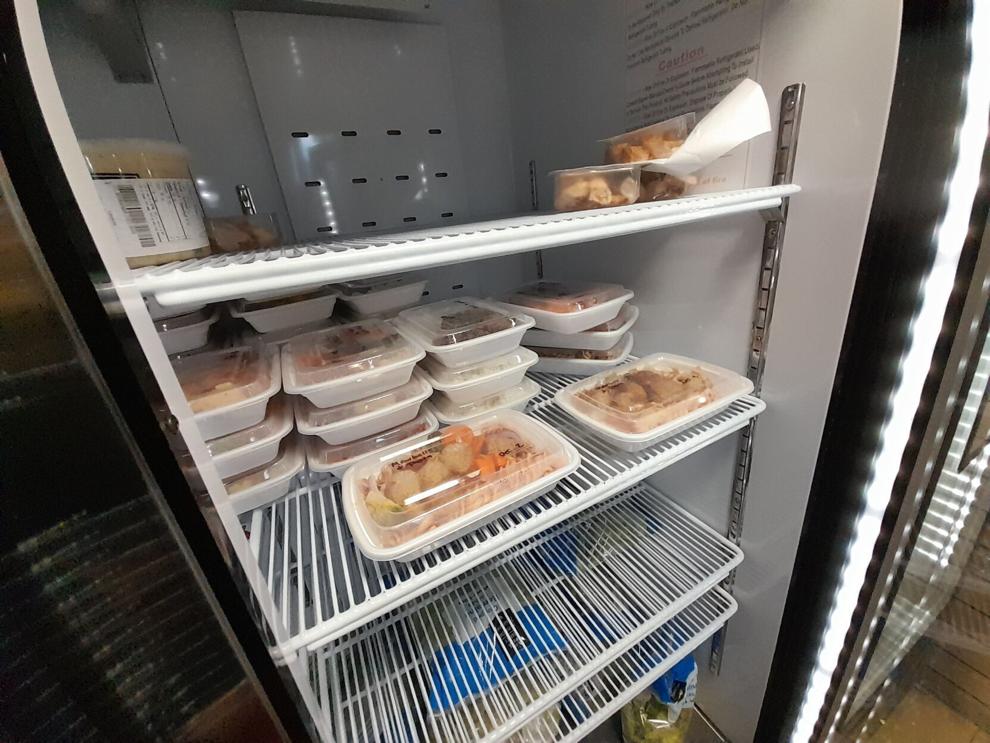
Those staying at the former motel have their own bedrooms, bathrooms, kitchenettes and closets. They can also use a larger communal kitchen to cook and eat prepared meals that Wesley provides.
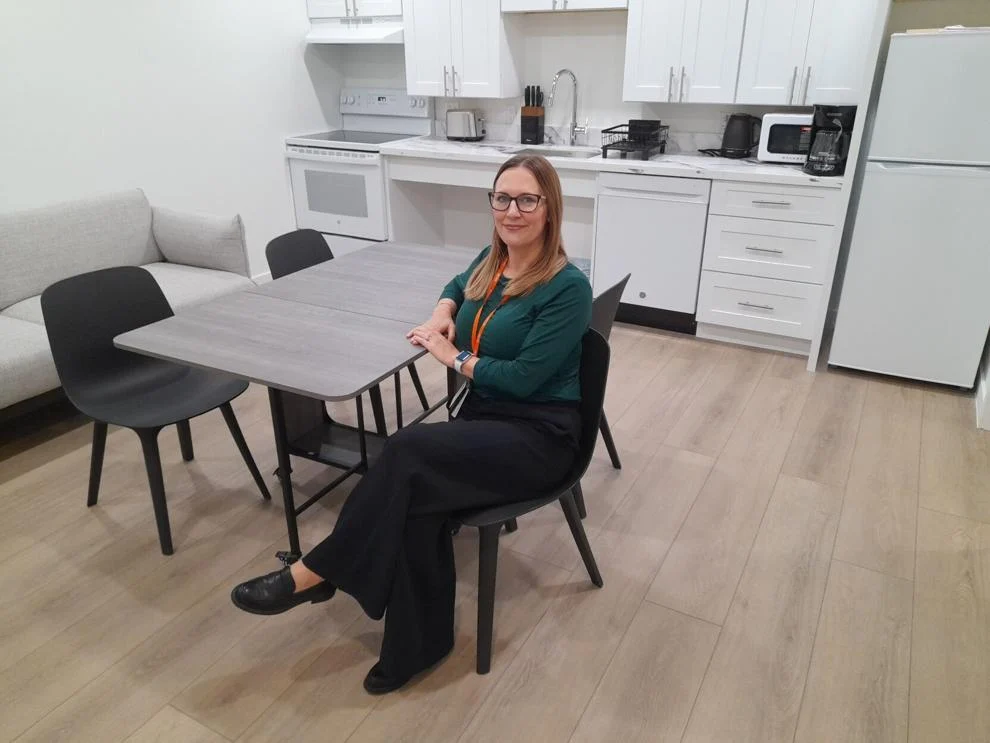
Teviah Moro/The Hamilton Spectator
Substance use and mental health are factors for some at the shelter, but affordability woes are the most common driver of housing loss, says Kristyn Bruce, Wesley’s senior director of housing and outreach.
“A lot of people just aren’t able to keep up with rent anymore.”
That includes other older women like Barbara, Bruce says.
“And they try to re-enter the housing market, it’s completely unaffordable, like $1,500, $2,000 for a unit, so they’re not able to go back.”
Some aren’t very computer-savvy, haven’t filed their taxes in a while or face language barriers, making the search for affordable homes more challenging, Bruce says.
“They almost get caught in a cycle, where all of a sudden, they don’t know what to do.”
Wesley’s case managers work with clients to work through that with the goal of helping them line up homes they can afford.
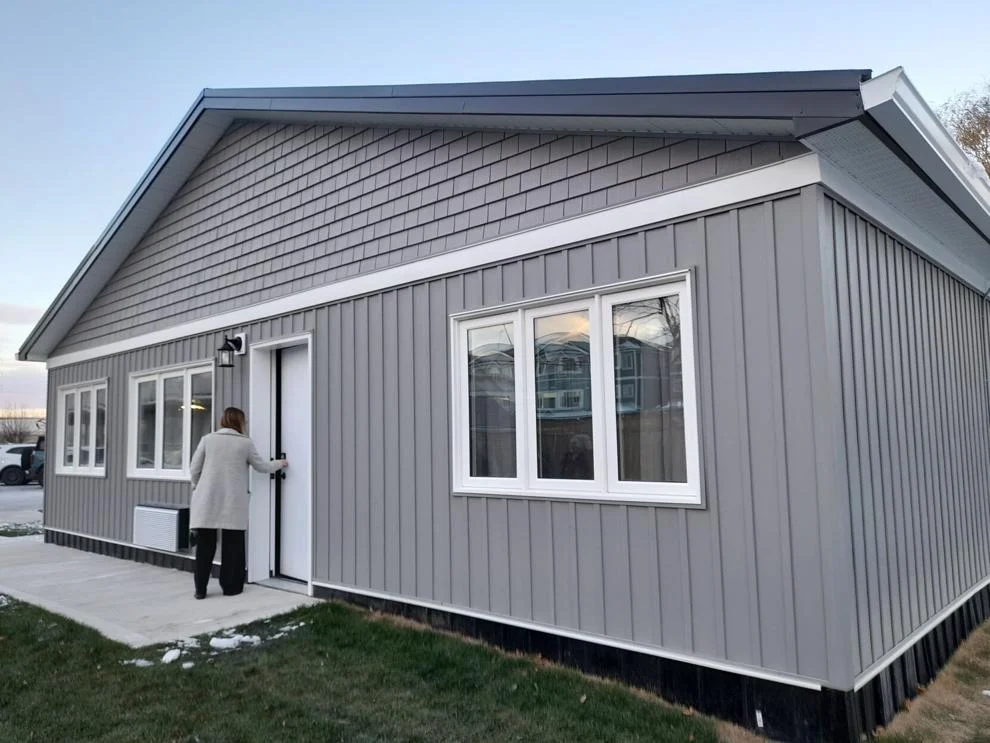
Teviah Moro/The Hamilton Spectator
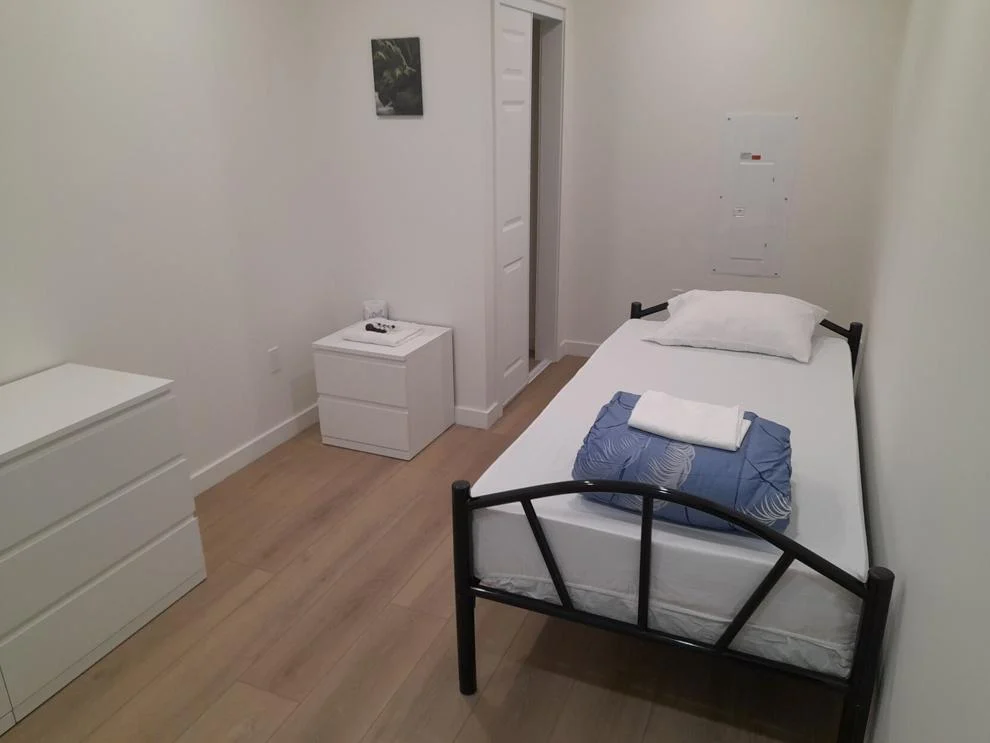
At the rear of the property, Halton has set up two new modular units with a living room and two bedrooms in each, as well as accessible bathrooms and kitchens.
Halton received roughly $500,000 in provincial funding for the modular units, which cost about $600,000 overall, Dorman noted.
The units take immediate pressure off the shelter system, but in the long run, they can be adapted to dovetail with the region’s goal to create 165 units of supportive housing in coming years, she said.
Barbara, who soon expected to move into affordable housing for seniors in Oakville with Wesley’s help, decided early on to make the best of her situation.
That included maintaining a sense of normalcy.
“That makes me feel better, so I go to church. I go to the same supermarket. I do everything,” she says.
After that, it’s back “home.”
“My bed is there. I have a kettle where I can make tea. I have a toaster that I can (use to make) toast. I make scrambled eggs in the microwave. I have a bed and a chair to sit on. I have my own bathroom.”
Teviah Moro’s reporting on housing and homelessness is funded by Hamilton Community Foundation, which supports reliable journalism to advance public awareness. HCF does not assign, edit, vet or endorse editorial content. Reach him at tmoro@thespec.com.

