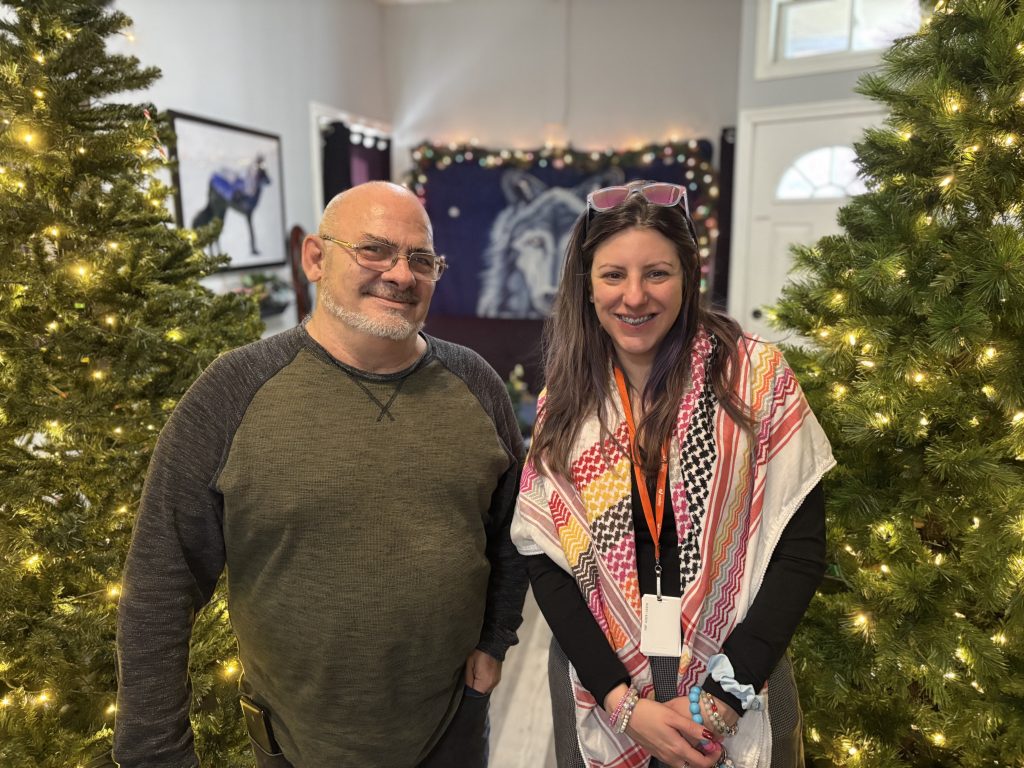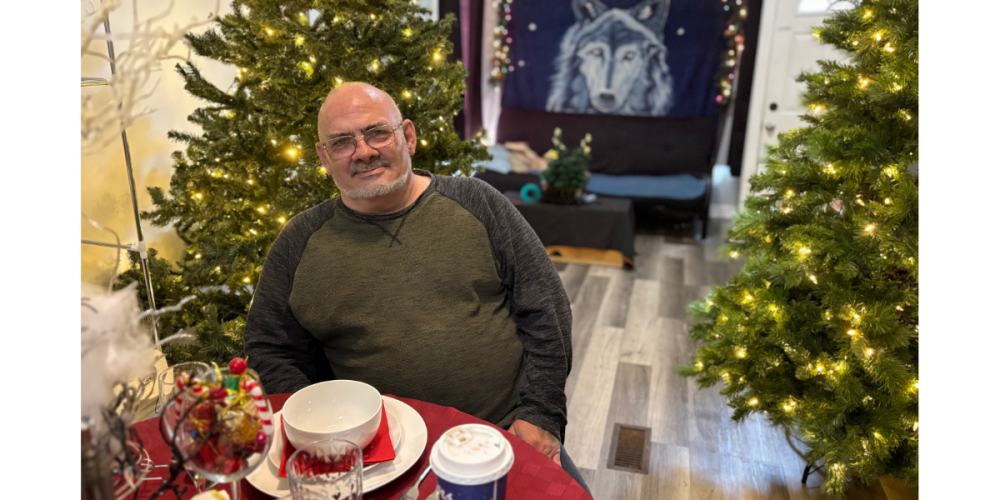
Michael is a helper; he’s always looking out for the needs of those around him and doing whatever he can to help. He has literally given the roof over his head to those who needed it more. After everything he has been through, he still regularly takes the time to make and distribute sandwiches to those who might not know where their next meal is coming from.
Michael is also quick to say that while this story may carry his name, it doesn’t belong to him alone. “For as much as people say this is my story,” he says, “what about the workers who support people in situations like mine?”
Like many who face similar hardships, Michael’s life has been shaped by loss, instability, and long stretches of depression. He lost his mother to cancer at a very young age, having nowhere else to go and ending up in the child welfare system being shuffled around to twelve different homes before ending up on his own, downtown Toronto, at age 16.
Over time, unresolved trauma, grief, and circumstances out of his control led to even more difficulties including failed relationships, separation from his children, and eventually homelessness. Not to mention his sense of self-worth that went out the window, leaving him unsure if anything would ever go right for him.
“I lost sight of me, of who I was,” he says.
Having known nothing but a life of constantly moving from place to place, Michael ended up in British Columbia working in the coal mine. Though profitable, he eventually left this job to return to Ontario when his son needed his support. “I left everything and gave my trailer away, I just came right back because my son needed me.”
From Hamilton, to BC, back to Hamilton, to Ottawa, and back to Hamilton again, housing stability was unfortunately not something he was familiar with and after couch surfing for a while, he found himself struggling financially and emotionally. With few options, he ended up living outdoors and in encampments around the city.
This time of Michael’s life was especially marked by exhaustion, insecurity, and deep emotional pain, but even when he was struggling, even when he had very little for himself, his instinct has always been to look out for others in need. Helping people is ingrained in him, it’s what he was meant to do. It’s what kept him going through every hardship he faced.
While living in the encampments, he volunteered to help make spaces safer, shared supplies, and even gave away tents he had purchased to others who needed them. Helping others became a way of coping with his own pain.
“I was masking my hurt by helping people,” he explains. “If even one person out of ten turned things around for themselves, then I knew it was worth it.”
But beneath that generosity was a man in crisis. He describes that “life felt like it was giving me nothing but pain.” At this point where the pain seemed endless, depression, unresolved grief, and the weight of life made him question whether continuing was worth it at all.
After all those years, the one thing that started making positive change was connection. Michael met Outreach Workers from various organizations who took the time to see him, listen without judgment, and walk beside him rather than simply telling him what to do. He felt lucky to meet workers who recognized both his struggles and his strengths.
One conversation in particular became a turning point for Michael. “To help others, you’ve got to help yourself,” a worker named Anna told him. “If you don’t, how can you keep doing what you’re doing to help them?”
It was simple, but it came at the right time and Michael knew it was time to find his way back to himself.
For the first time in a long while, Michael felt that someone wasn’t just directing him, but genuinely supporting him. Step by step, with consistent guidance, support, and encouragement, he began navigating systems, accessing services, and actually looking ahead to a future of stability and purpose.
His journey eventually led Michael to Wesley programs and services, and to his current support worker, Christine. Through Wesley’s Housing and Outreach (Housing First) program, designed for individuals experiencing episodic or chronic homelessness, Michael received support in securing and maintaining safe, affordable, and stable housing within the community. He is also able to access support to achieve both immediate and long-term life goals, alongside recreation therapy tailored for those with lived experiences of homelessness. Part of the program also allows clients to receive referrals and support to navigate healthcare and government assistance systems, ensuring they have access to the services they need to thrive.
Conquering every bump in the road with a positive outlook, Christine and Michael worked together and found an apartment for him to move into. Now, for the first time in a long time, he has housing that he can confidently call his own. He’s been able to decorate it in a way that brings him joy, and even get back to making art when he has time.
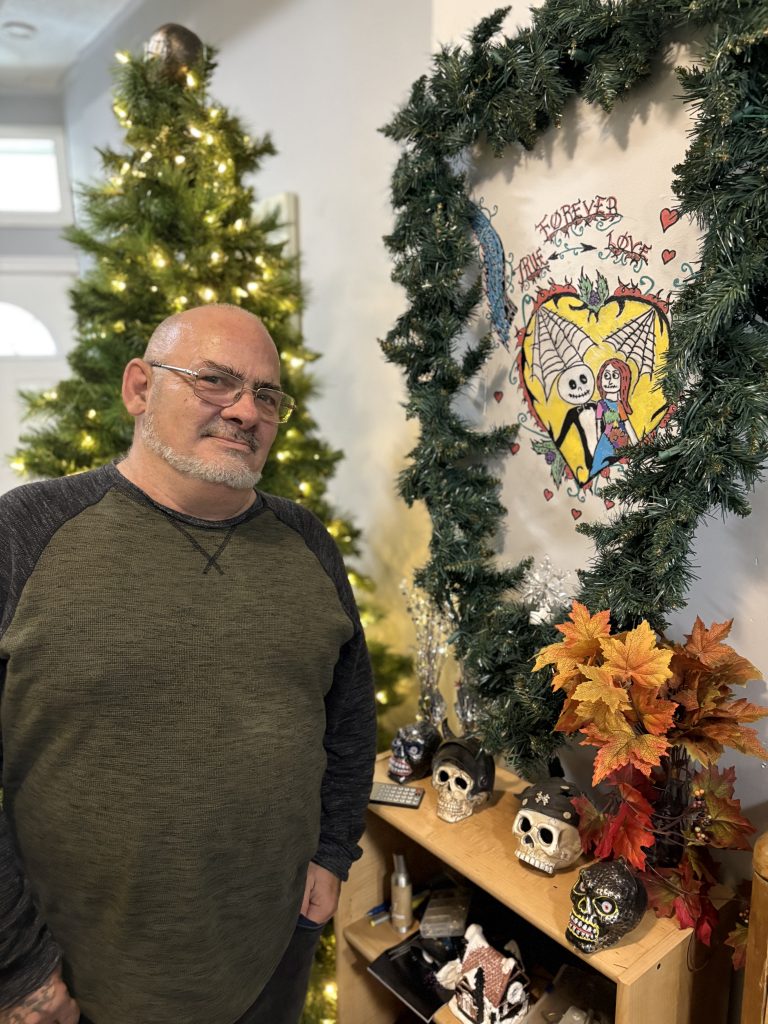
“It feels good. Secure. More centered,” he says. “I can put up two Christmas trees if I want. Or twelve.” He really does have a whole festive forest in his apartment, and in a way, it makes him think about what it might be like to live outside if you took away all the problems the world is facing today. “You could go for a walk, sit under the trees, listen to the waves hitting the shoreline, listen to the crickets. It’s good for the soul, but you layer on all of these terrible things people have to face every day and you can’t hear the waves anymore. Everything else takes that peacefulness away.”
Having a home gave Michael space. Not just physical space, but also the mental and emotional space he needed to begin overcoming past trauma and really think about who he wants to be next. And wouldn’t you know it, once again, his answer comes back to helping others. At 58 years old, Michael is realistic about the road ahead, but hopeful. He’s thinking deeply about what comes next, including how he might continue helping others through volunteering or maybe even in a more formal way by becoming an Outreach Worker himself.
“I’ve always been a people person,” he says. “I want to help others so they don’t have to live a life like I did. Or at least let them know that things can change and there are people who want to help.”
Michael speaks openly about how essential community services are, not just in providing housing or resources, but in hiring workers who are passionate about their work. “Anyone can tell you what to do,” he says. “But workers who truly care don’t just tell you, they help lead you. There’s a big difference.”
Today, Michael is rebuilding his confidence and rediscovering his self-worth. He knows the journey isn’t over, and that there will still be hard times, but now he knows he doesn’t have to face them alone.
“This is what makes a community a community,” he says. “For as much as people say this is my story,” he says, “I always think, what about the workers? What about those who carry the weight of others’ lives every day, often without recognition. That work takes a special kind of understanding and compassion that a lot of people don’t see.”
Forever grateful, Michael is intentional about naming the people who helped him along the way: Teeley who does outreach helping to provide food, clothing, and more to those in need, Justin and Lindsay at the YMCA, and Anna, Christine, and others at Wesley who have taken the time to truly see and support him.
“Without them,” he says, “I really couldn’t say where I’d be today.”
Michael’s story is a reminder that change doesn’t happen in isolation. It happens when resources work together within the community to build connection, compassion, and a willingness to meet people where they are so they can walk forward together. A strong community starts with a solid foundation, and then is built up carefully, one brick at a time.